
Briefs
Culture
Pontormo in Rome
18 October 2026

Until 7 February 2027, the Scuderie del Quirinale are hosting the first major solo exhibition dedicated to Pontormo. A leading figure in 16th-century Florentine painting, Pontormo embodies the transition from the High Renaissance to Mannerism. In addition to a remarkable collection of works from the Uffizi Galleries, the exhibition will feature loans from museums and collections around the world.
AR(t]CHIPEL Festival in the Loire Valley
18 October 2026

Until 30 April 2027, the 4th edition of the AR(t]CHIPEL festival is taking place across the Centre-Val de Loire region. In partnership with the Centre Pompidou, it is showcasing works by Alexander Calder and Max Ernst. What makes the festival unique is that it is spread across several venues, notably the Château de Chambord and the Chaumont-sur-Loire estate, located across the region's six departments, allowing visitors to discover contemporary art and the region's heritage in an original way.
'Pre-Raphaelites' in Newcastle
18 October 2026

Until 13 February 2027, the Laing Art Gallery in Newcastle is hosting an exhibition devoted to the creative exchanges between art and poetry within the Pre-Raphaelite movement. In particular, it explores how the artists drew inspiration from poets and writers such as Dante Alighieri, John Keats and Alfred Tennyson to create their works. Over 100 pieces of work are on display.
Basel Art Fair in Paris
19 October 2026

From 23 to 25 October, the Grand Palais is hosting Art Basel Paris, a contemporary art fair bringing together 211 international galleries from 41 countries and territories. The fair is organised into three sections: 'Galleries', dedicated to established galleries; 'Emergence', devoted to emerging galleries and artists; and 'Premise', showcasing unique curatorial projects. Alongside this, exhibitions, installations and events are taking place across the city.
Defence and Security
The Ukrainian President in the United Kingdom
18 October 2026
On 14 October, Ukrainian President Volodymyr Zelensky visited the United Kingdom, where he held talks with the British Prime Minister, Andy Burnham. The Prime Minister unveiled a new package of military aid, comprising light multi-role missiles, designed to strengthen support for Ukraine. He announced that deliveries of British-made air defence systems to Ukraine would be accelerated. He stated that the UK would continue to develop innovative military solutions tailored to the needs of the Ukrainian battlefield, notably by integrating British equipment with materiel supplied by other partners. Finally, with regard to long-range missiles, the two leaders discussed ways of stepping up UK defence support for Ukraine as winter approaches.
Democracy and Politics
Swedish MPs refuse to appoint Magdalena Andersson as Prime Minister
18 October 2026
On 15 October, the Swedish Parliament rejected Social Democrat leader Magdalena Andersson's attempt to form a government. This vote prolongs the uncertainty surrounding the identity of the next Prime Minister, one month after the general election on 13 September, in which the left bloc secured a three-vote lead over the right bloc. However, none of the centre-left parties, apart from the Social Democratic Party, voted in her favour. The Speaker of Parliament must now begin discussions with the various party leaders to find a candidate to nominate for the post. On 19 October, the Speaker of Parliament, Andreas Norlén, tasked the leader of the centrist party, Elisabeth Thand Ringqvist, with exploring the conditions for a government that could be supported by a majority of MPs.
Digital and Technology
Launch of the RAISE initiative to support European research
18 October 2026

On 15 October, the European Commission launched a commitment initiative under RAISE (Resource for AI Science in Europe), with the aim of mobilising support from the private sector and philanthropic organisations for European research into AI and science. This initiative aims to facilitate researchers' access to essential resources, such as AI models, computing capacity, research software licences, data, etc.
Diplomacy and Geopolitics
Visit by the King of Spain to Ceuta and Melilla
18 October 2026
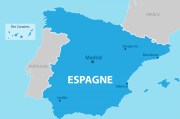
King Felipe VI and Queen Letizia of Spain visited Ceuta on 13 October, marking the royal couple's first visit to the Spanish enclave two months after an unprecedented influx of migrants from Morocco. Addressing the people of Ceuta, the King reaffirmed Spain's sovereignty over the territory, stating that Ceuta and Melilla "[were] part of Spain's national and political reality" and that the country's territorial integrity "[was] non-negotiable". After meeting with local residents, they paid tribute to the migrants who died during the crossing on 30 and 31 July from the city's Muslim cemetery. The following day, they continued their visit to Melilla, another autonomous Spanish enclave.
Economy and Finances
IMF report on the global economic outlook
18 October 2026
On 13 October, the International Monetary Fund (IMF) published its report on the global economic outlook. The global economy remains resilient despite successive shocks, including geopolitical conflicts, uncertainties surrounding artificial intelligence (AI) and trade tensions. The IMF stresses, however, that the room for manoeuvre available to economies is rapidly narrowing in the short term. It is therefore calling on governments to adopt credible plans to consolidate public finances. Managing Director Kristalina Georgieva presented a global action plan proposing various policies to "manage uncertainty and build resilience", advising in particular that private-sector-led growth should be promoted by harnessing AI and digitalisation, as well as by modernising the labour market and upskilling the workforce.
The future of the European automotive industry
19 October 2026

France and Germany have found common ground on the future of the European automotive industry. In a joint statement published on 16 October, the two countries aim to combine climate targets, regulatory flexibility and production in Europe. They intend to encourage investment, research and development, as well as the resilience of supply chains. The definition of "Made in Europe" could influence decisions on where to locate production and access to public funding. The Franco-German partnership also plans to relax the proposed framework for CO₂ emissions from new cars in 2035. The other Member States and the European Parliament have yet to approve the proposal.
Statement by the "Friends of Cohesion"
18 October 2026
Seventeen Member States of the European Union (Bulgaria, Croatia, Cyprus, Spain, Estonia, Greece, Hungary, Italy, Latvia, Lithuania, Malta, Poland, Portugal, Romania, Slovakia, Slovenia and the Czech Republic) reiterated, on 15 October, their call not to sacrifice traditional policies – the Common Agricultural Policy (CAP) and cohesion policy – in the name of a 'modernisation' of the 2028–2034 Multiannual Financial Framework (MFF) that would place the sole emphasis on competitiveness, research and defence.
Energy and Climate
Methane: Commission proposes flexibility for importers
18 October 2026

On 14 October, the European Commission adopted a proposal to postpone the implementation of the specific provisions of the EU Methane Regulation relating to importers by one year, in a bid to ease the pressure on European industry and national authorities. The proposed targeted amendment concerns the monitoring, reporting and verification obligations for importers of natural gas, oil and coal.
European Council
European Council meeting
18 October 2026
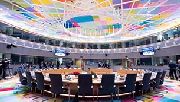
On 15 and 16 October, the Heads of State or Government of the 27 Member States, meeting in Brussels for the European Council, called on the co-legislators to conclude negotiations by the end of the year on the 28th Company Law Package, the acceleration of industrial capacity, the 'European Networks' package and simplification (digital, environment and automotive). On the 2028–2034 budget, they aim to reach an agreement before the end of the year. They held an exchange of views with the Ukrainian President, Volodymyr Zelensky, and expressed their full and resolute support for him. They took note of the first report on operational readiness, drawn up by the European Defence Agency, and endorsed its overall assessment. They call for the critical capability gaps to be addressed. They also reaffirm the objective of a European defence capability ready for rapid and large-scale deployment by 2030.