
Briefs
Citizenship and Mobility
Strengthening passengers' rights
26 October 2026
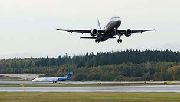
On 20 October, MEPs adopted a legislative resolution aimed at strengthening the enforcement of passengers' rights within the EU. The text provides for clarification of the rules for airline tickets purchased through an intermediary, the introduction of a common European form for claims for compensation and refunds, and better protection for passengers with disabilities and reduced mobility. It extends the obligation to draw up and publish service quality standards relating to the rights of these passengers to air carriers, bus and coach operators, and terminal operators. Following its formal adoption by the Council, the text is expected to come into force on 23 October 2027.
Culture
Etiuda&Anima in Kraków
26 October 2026

Until 31 October, Kraków is hosting the 33rd edition of the Etiuda&Anima film festival. As Poland's leading festival for animated short films, Etiuda&Anima showcases works by professional filmmakers, independent filmmakers and students. Alongside screenings of the selected films, the festival offers a rich programme of music, visual arts, creative workshops and discussions.
Whistler in Amsterdam
26 October 2026

Until 10 January 2027, the Van Gogh Museum in Amsterdam is paying tribute to the painter James McNeill Whistler (1834–1903) in a unique retrospective, the first of its kind in the Netherlands. A 19th-century enfant terrible, Whistler is renowned for his innovative, avant-garde and even rebellious style. Particularly noteworthy among his works are the engravings he produced across Europe – in Amsterdam, Paris and Venice – which earned the admiration of none other than Vincent van Gogh himself.
Defence and Security
Visit by the Finnish Prime Minister to Kyiv
26 October 2026
On 22 October, the Finnish Prime Minister, Petteri Orpo, travelled to Ukraine to restate his country's support. He announced a contribution of €5 million to the energy guarantee fund and €2 million in humanitarian aid. Together with Ukrainian President Volodymyr Zelensky, he took part in the Ukraine-Finland Forum, which saw the signing of several contracts relating to the defence industry, drones, transport, satellite communications and construction. Since the start of the war in Ukraine, Finland has provided nearly €5 billion in financial support to Ukraine.
Towards a European response to the escalation of Russian strikes within the EU and in the Black Sea
26 October 2026
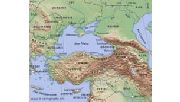
On 20 October, the High Representative of the Union for Foreign Affairs and Security Policy, Kaja Kallas, addressed the European Parliament in Strasbourg regarding the escalation of Russian strikes in the European Union, in particular those targeting maritime transport in the Black Sea and Ukrainian export routes, and the consequences of these attacks on global food supplies. She condemned Russia's exploitation of food security. To address this, she called for a "strong and united European response on three fronts": maintaining Ukraine's access to global markets, strengthening security in the Black Sea and on the Danube, and increasing international pressure on Russia.
Starlink service resumes in Ukraine
26 October 2026
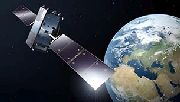
On 24 October, Ukrainian President Volodymyr Zelensky announced the resumption of Starlink service in the country. Ukraine had seen its access to the Starlink network severely disrupted after being accused by Elon Musk of using it to carry out lethal strikes in Russia. For its part, Kyiv has denied the accusations and reaffirmed the vital importance of the network for its military communications. The Ukrainian President thanked the United States for its support and emphasised the importance of involving European partners in future peace negotiations.
Democracy and Politics
70th anniversary of the 1956 Hungarian Revolution
26 October 2026
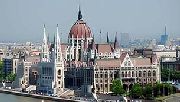
On 23 October, numerous commemorative events were held to mark the 70th anniversary of the 1956 Hungarian Revolution. Hungarian diplomatic missions organised a wide range of events in several countries, including wreath-laying ceremonies, receptions, conferences and celebrations. The main ceremony took place at the Hungarian Parliament in Budapest, attended by António Costa, President of the European Council, and Ursula von der Leyen, President of the European Commission.
Incumbent president defeated in Serbia's parliamentary elections
26 October 2026
On 25 October, Serbs voted for change in the snap parliamentary elections. The incumbent president, Aleksandar Vučić, who had been in power for fourteen years and had tendered his resignation so that he could stand as prime minister, conceded defeat. The Student Movement is credited with 53 per cent of the vote and 140 seats – exceeding the absolute majority of 126 seats – compared with 39 per cent and 104 seats for the outgoing leader's party. Voter turnout was particularly high: nearly 69 per cent, a level not seen for over thirty years.
Diplomacy and Geopolitics
Emmanuel Macron's visit to the Middle East
26 October 2026
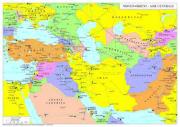
The President of the French Republic, Emmanuel Macron, visited Kuwait, the United Arab Emirates, Bahrain and Qatar from 19 to 21 October. In light of the current geopolitical situation, he championed freedom of navigation in the Strait of Hormuz and the diversification of France's energy supplies. He succeeded in securing additional monthly deliveries of 200,000 tonnes of diesel from Bahrain, as well as the equivalent of 2 TWh per month of liquefied natural gas from Qatar during the winter months. In principle, this supply should limit the impact of the energy crisis on purchasing power.
Middle East meeting in Istanbul
26 October 2026
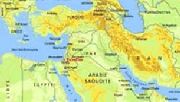
On 23 October, the foreign ministers of eight countries – four from the E4 (France, Germany, Italy and the United Kingdom) and four from the R4 (Egypt, Saudi Arabia, Pakistan and Turkey) – met in Istanbul. Their discussions focused on the conflict between the United States, Israel and Iran, the Israeli-Palestinian conflict, the situation in Yemen, as well as security and freedom of navigation, particularly in the Strait of Hormuz, the Strait of Bab el-Mandeb and the Black Sea. They emphasised the need to prioritise dialogue, diplomacy and de-escalation in order to achieve lasting negotiated solutions. They agreed to continue their discussions in this format in order "to prevent conflicts and promote regional and international peace and stability".
Economy and Finances
London grants permission for North Sea gas drilling
26 October 2026
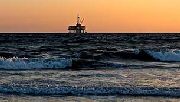
On 21 October, the government granted permission for drilling at the Jackdaw gas field in the North Sea, off the coast of Scotland. The project had been initiated by former Prime Minister Boris Johnson in 2022, but was put on hold due to legal challenges. The UK government maintains that the drilling will not hinder the achievement of carbon neutrality by 2050, will support the country's energy security and will have a positive impact on employment and purchasing power. With the Budget presentation just days away, the Chancellor of the Exchequer announced the creation of a £2 billion green transition fund, financed by North Sea oil and gas revenues.
Foundation
A new episode of Station Schuman featuring General Lecouffe
26 October 2026
How is Europol adapting to changing crime patterns in Europe? In this episode, Jean-Philippe Lecouffe explores the Agency's remit and responsibilities, the key issues in European police cooperation, and the challenges it faces – from migrant smuggling to cybercrime. A discussion to gain a better understanding of Europol's role in European security and the prospects for the development of its mandate – available to listen to on the Foundation's website, Spotify, Deezer and YouTube!
Prizes
European Parliament's Daphne Caruana Galizia and Sakharov Prize Ceremonies
26 October 2026
On 21 and 22 October, the European Parliament's Daphne Caruana Galizia and Sakharov Prizes were awarded, respectively, to an investigation into the migration agreement between Italy and Albania, and to the International Criminal Court (ICC) and its senior officials. The Daphne Caruana Galizia Prize recognises "journalism of excellence that promotes and defends the fundamental values and principles of the Union, such as human dignity, freedom, democracy, equality, the rule of law and human rights". The Sakharov Prize, meanwhile, honours individuals, groups or organisations that have made an exceptional contribution to the defence of human rights and fundamental freedoms, in particular freedom of thought.