Geography
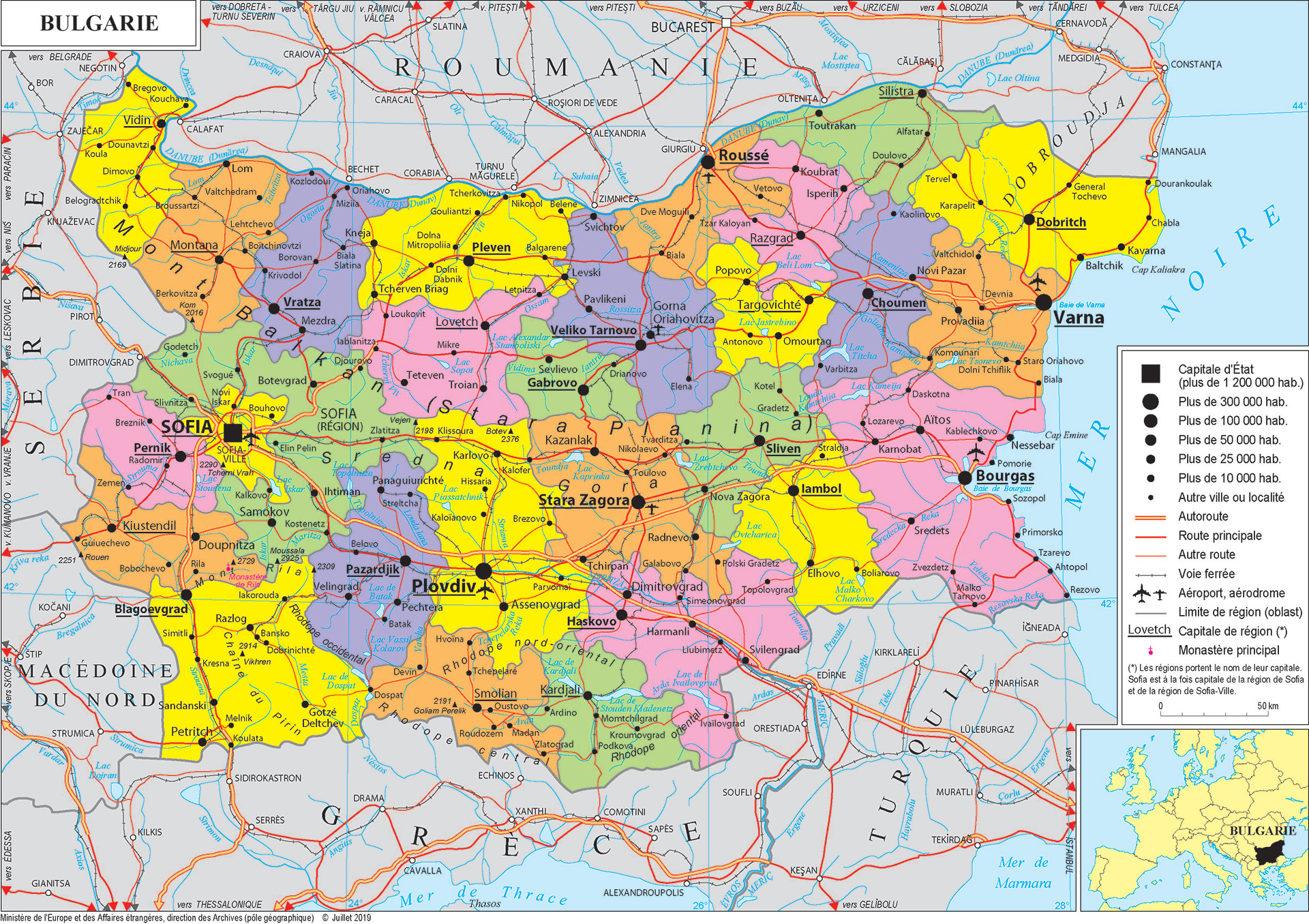
Area : 100,910 km²
Borders : 1,808 km (Greece: 494 km, Macedonia: 148 km, Romania: 608 km, Serbia: 318 km, Turkey: 240 km)
Coastline : 354 km (Black Sea)
Capital : Sofia
Official language : Bulgarian
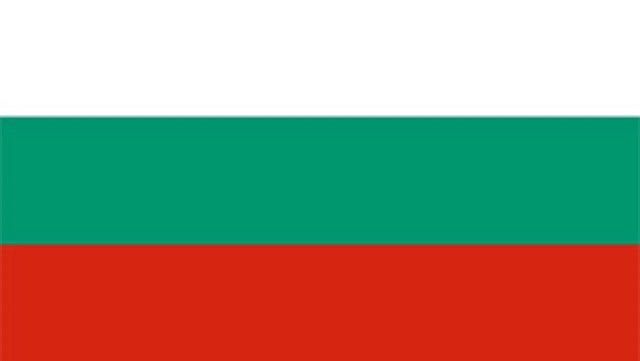
Flag
Population
Population : 6,437,360 inhabitants (2025 est.)
Crude natural change rate : -7,3‰ (2024)
Population repartition: 14% of the total population < 15y , 23.9% of the total population > 65y (2025)
Foreign residents: EU nationals 0.4%, non-EU nationals 1.4% (2024)
Crude net migration rate: 6,1‰ (2024 est.)
First time asylum applicants: 3,895 (2025)
Life expectancy: men 72,2 years, women 79,5 years (2025)
Religions: Orthodox Christian 64.7%, Muslim 9.8%, other 0.1%, none 3.7%, unspecified 20.7% (2021 est.)
Source : Eurostat, The World Factbook, ECB
Economy
Currency: Euro
GDP: € 116 billion (2025)
GDP per capita (PPS): € 29 929 (2025)
GDP growth : 3% (2025)
Inflation: 3.3% (February 2026)
Public debt: 25,5% of GDP (2025)
Unemployment: 3.2% (April 2026)
Stock of foreign direct investment from the entire world: 55,6% of GDP (2024)
Performance sectors: food industry, tourism, petrochemistry
Budget balance: -2.9% of GDP (2025)
Source : Eurostat, European Commission, Bulgarian National Bank
Political system
Parliamentary Republic (Constitution of 12th July 1991):
Head of State: Iliana Iotova (Bulgarian Socialist Party), former vice-president under Rumen Radev, took office on 23 January 2026 following his resignation in December 2025.
Prime Minister: Roumen Radev was appointed on May 8, 2026. He currently heads a coalition government comprising the Social Democratic Political Movements, the Social Democratic Party, and the Our People Movement.
Monocameral parliamentary system: The National Assembly comprises 240 seats. The deputies are elected for four years by direct universal suffrage according to proportional representation. A threshold of 4% of votes must be reached in order for a political party to be represented in re
Political representation
Current composition of the National Assembly following the 9th June 2024 elections:
- 131 seats "Progressive Bulgaria"
- 39 seats GERB-UDF (Citizens for European Development of Bulgaria- Union of Democratic Forces)
- 37 seats PP-DB (We Continue the Change- Democratic Bulgaria)
- 21 seats DPS-NN (Movement for Rights and Freedoms - New Beginning)
- 12 seats Vazrazhdane (far-right political party)
Women's representations
- in government: 5/21
- in the National Assembly: 60/240
Next Elections:
On The Same Theme
Country Sheet
Country Sheet
Country Sheet
Country Sheet
Country Sheet
Country Sheet
Country Sheet
Country Sheet