
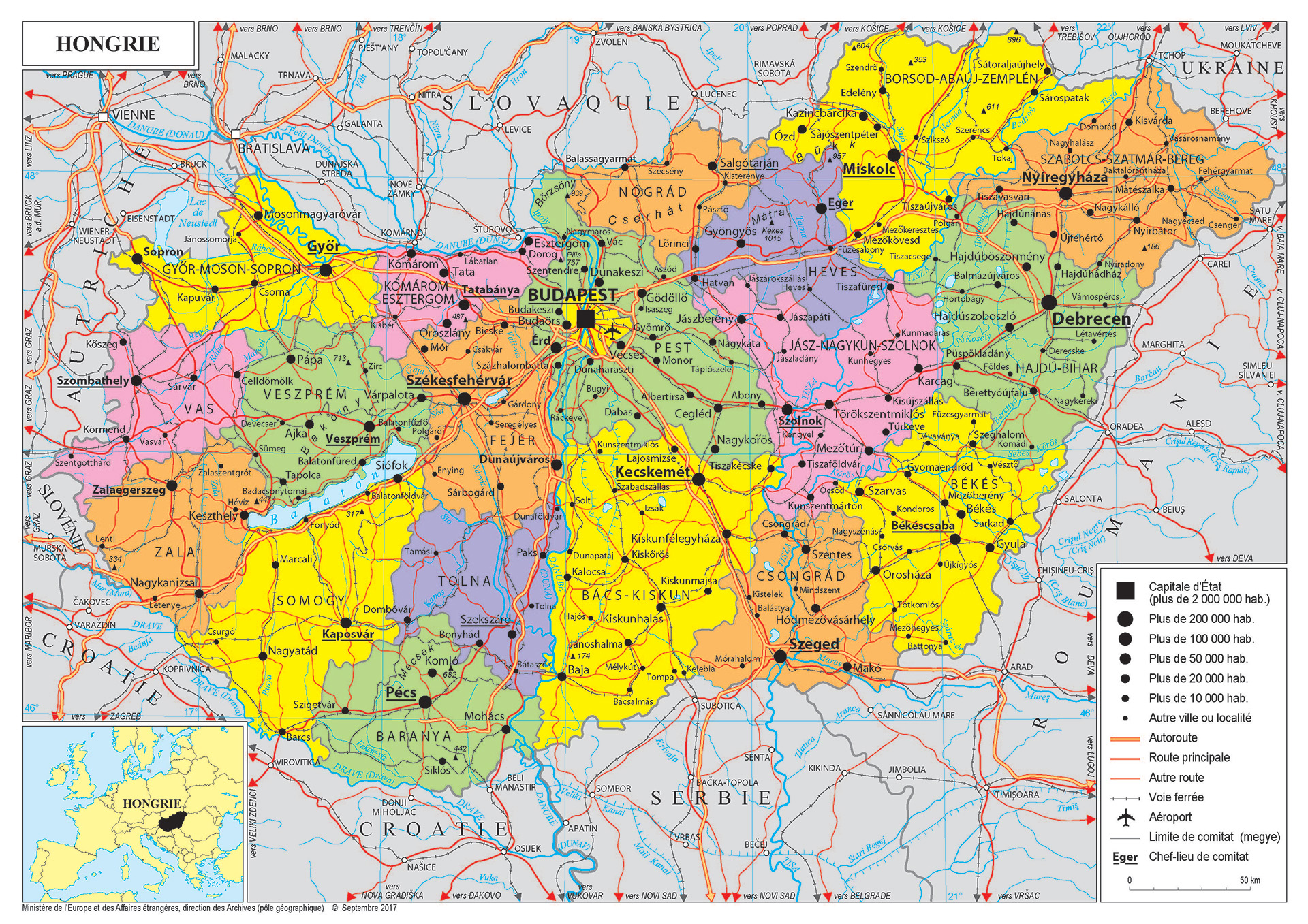
Geography
Area : 93,030 km²
Borders : 2,171 km (Austria 366 km, Croatia 329 km, Romania 443 km, Serbia 151 km, Slovakia 677 km, Slovenia 102 km, Ukraine 103 km)
Capital : Budapest
Official language : Hungarian
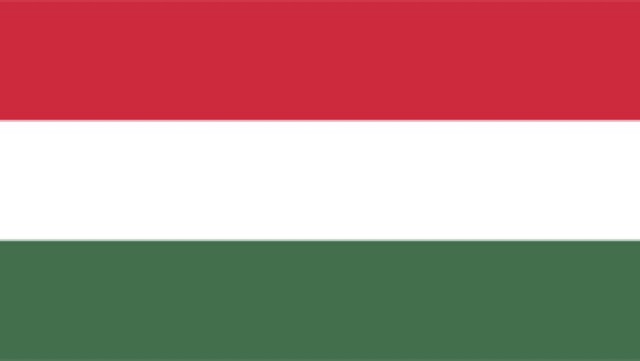
Flag
Population
Population : 9,539,502 inhabitants (2026)
Crude natural change rate : -5,1‰ (2024)
Population repartition: 14.3% under 15 years old, 20.8% over 65 years old (2025)
Foreign residents: 1% EU nationals, 1% non EU nationals (2021)
Crude net migration rate: 0,4‰ (2024)
First time asylum applicants: 110 (2025)
Life expectancy: men 73,7 years, women 79.9 years (2024)
Religions: Roman Catholic 30.1%, Calvinist 9.8%, Lutheran 1.8%, Jews 0.08%, unspecified 40.1%, none 16.5% (2022 est.)
Ethnic groups: Hungarian 88%, Romani 2.1%, German 1.5%, other 5.1%, unspecified 11.3% (2022 est.)
Source : Eurostat
Economy
Currency: Forint (HUF) (exchange rate December 2025: 1€ = 388,80 HUF)
GDP: € 218,834 billion (2025)
GDP per capita (PPS): € 34,636 (2024)
GDP growth : 0.5% (2025)
Inflation: 1.8% (March 2026)
Public debt: 74,6% of GDP (2025)
Unemployment: 4.4% (March 2026)
Stock of foreign direct investment from the entire world: 116,4% of GDP (2024)
Performance sectors: electronics, pharmaceuticals, automobile and food industries
Budget balance: -4.7% of GDP (2025)
Source : Eurostat, Trading Economics, Countryeconomy
Political system
Republic, parliamentary democracy (The Fundamental law of Hungary, 25th April 2011)
Head of State: András Baka was elected on August 11th 2026 for a 5 year term. He took office on August 19th 2026.
Prime Minister: Peter Magyar (Tisza – pro -European conservative) won the elections on 12 April 2026, defeating former Prime Minister Viktor Orbán. He officially took office on 9 May.
Unicameral parliamentary system: The National Assembly (Országgyűlés) comprises 199 seats. The representatives are elected for four years by direct universal suffrage. During elections every citizen receives two ballot- papers. A separate ballot-paper serves voting on single mandate constituency candidates and another one voting on regional lists. While the number of single constituency MPs is always 106, the number of MPs from the regional and the national list vary election to election, however, the total number always adds up to 93.
Political representation
Parliament composition (since April 2022):
- 141 seats (Tisza)
- 52 seats (Fidesz – KNDP / Hungarian Civic Union – Christian Democratic People’ s Party)
- 6 seats (Mi Hazank / Our Homeland)
Women's representations
- in the government: 4/16
- in the Parliament : 54/199
Next Elections:
On The Same Theme
Country Sheet
Country Sheet
Country Sheet
Country Sheet
Country Sheet
Country Sheet
Country Sheet
Country Sheet