Geography
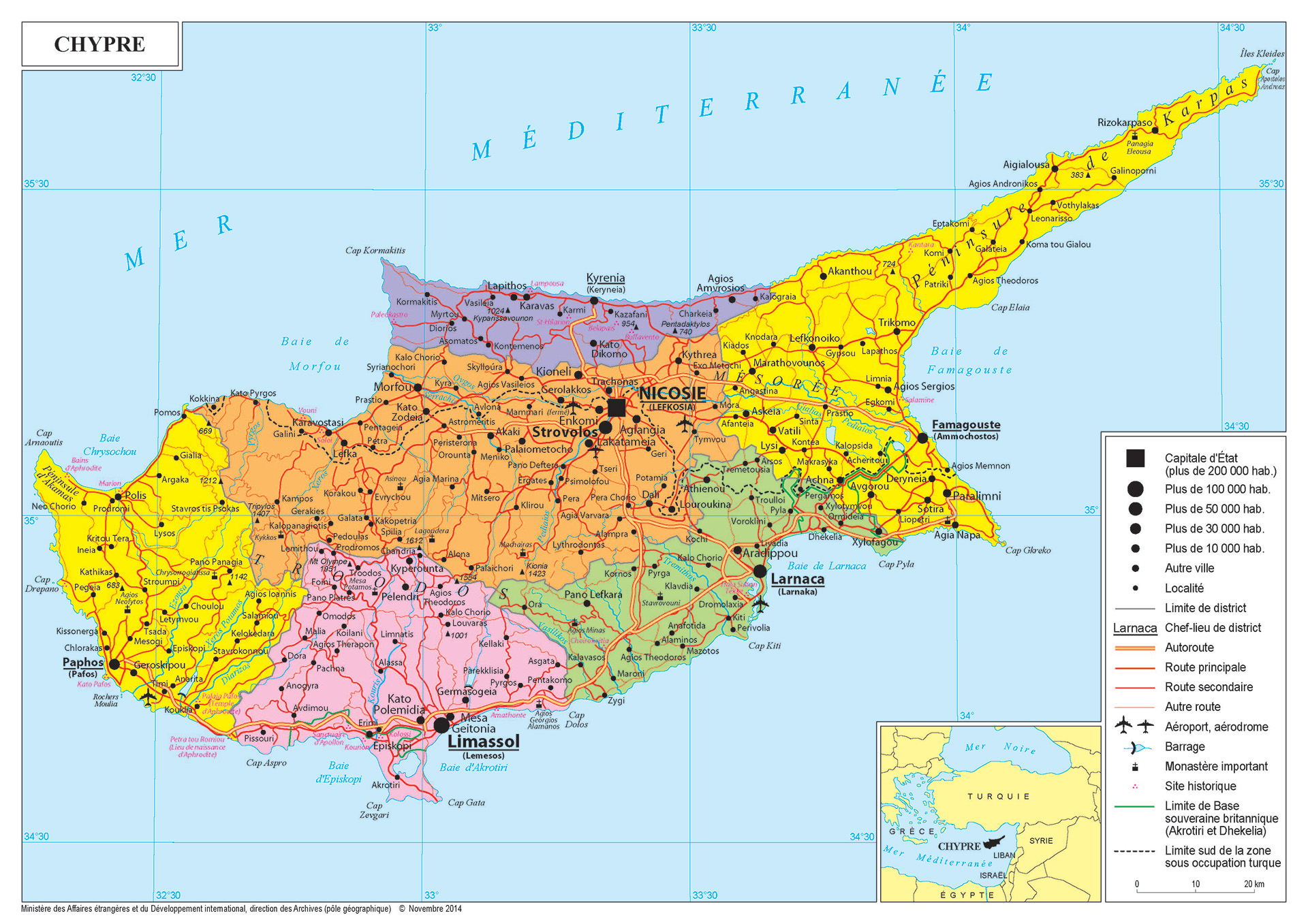
Area : 9,251 km² (of which 3,355 km² are in north Cyprus)
Coastline : 648 km
Capital : Nicosia
Official language : Greek
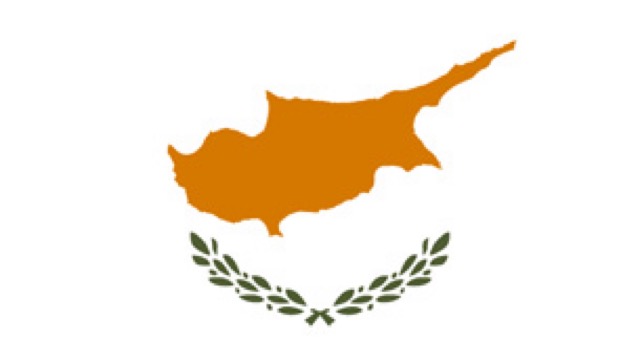
Flag
Population
Population : 1,362,551 (2024 est. - of which 982,966 people were in South Cyprus in 2025))
Crude natural change rate : -3.1‰ (2024)
Population repartition: 15.2% under 15 years old, 18.2% above 65 years old (2025)
Foreign residents: EU nationals 11%, non-EU nationals 13% (2024)
Crude net migration rate: 3.1‰ (2024)
First time asylum applicants: 4 610 (2025)
Life expectancy: men 81.5 years, women 85.6 years (2024)
Religions: Orthodox christians 89.1%, Roman Catholics 2.9%, Protestants 2%, Muslims 1.8%, other 1.4%, none 0.6%, unspecified 1.1% (2011 est.)
Source : Eurostat
Economy
Currency: Euro
GDP: € 36 484 billion (2025)
GDP per capita (PPS): € 45 183 (2025)
GDP growth : 3.8% (2025)
Inflation: 2.8% (April 2026)
Public debt: 55% of GDP (2025)
Unemployment: 4.3% (March 2026)
Stock of foreign direct investment from the entire world: 1,074.5% (2022)
Performance sectors: services, tourism
Budget balance: 3.4% of GDP (2025)
Source : Eurostat, Trading Economics, Countryeconomics
Political system
Independent Republic, Presidential regime
Independant Republic, Presidential regime Constitution of 6th August 11960; although some clauses are no longer applied since the crisis of 1963 led to a retreat of the Turkish Cypriot community from governmental activities.
Head of State: Níkos Christodoulídis, elected in 2023 for five years by direct universal suffrage. The duties of the Head of State and the Head of Government arecombined.
Monocameral legislative power: The House of Representatives comprises 80 seats (56 for the Greek Cypriotes and 24 for the Turkish Cypriotes which are vacant). The representatives are elected for five years according to a system of proportional representation.
Institutions and political situation: Concern only the South. Since the occupation of the northern part of the Island by Turkey (1974), the Turkish cypriot and Greek cypriot communities have been separated by the "Green Line"/ The Turkish part, in the north, which is not recognized by the international community, has established its own institutions. On 11 November 2002, Kofi Annan, then Secretary-General of the United Nation, presented a peace plan to both parties to reunity the island into a single contederal state in which each of the two communities would administer its own area autonomously. On 24 April 2004, the Cypriots overwhelmingly rejected the UN reunitication plan (15.03 / of the votes cast), while the inhabitants of the northern part of the island strongly supported it (with 64.91% voting "yes"). Negotiations resumed in September 2008 and are still ongoing. The United Nations would like the peace negotiations to be concluded so that a reunification plan can be submitted to the Cypriots through a referendum.
Political representation
Parliamentary composition in July 2023
- 17 seats DISY (Democratic Rally, right)
- 14 seats AKEL (Progressive Party of Workers' Party, radical left)
- 11 seats DIKO (Democratic Party, center right)
- 3 seats DIPA (Democratic Front, center)
- 3 seats ELAM (National People's Front, far right)
- 2 seats EDEK (Movement for Social Democracy)
- 2 seats KOP (Movement of Ecologists)
- 4 seats independent
Women's representations
- in the government: 2/12
- in the House of Representatives: 8/56
Next Elections:
On The Same Theme
Country Sheet
Country Sheet
Country Sheet
Country Sheet
Country Sheet
Country Sheet
Country Sheet
Country Sheet